MARCH 30, 2026
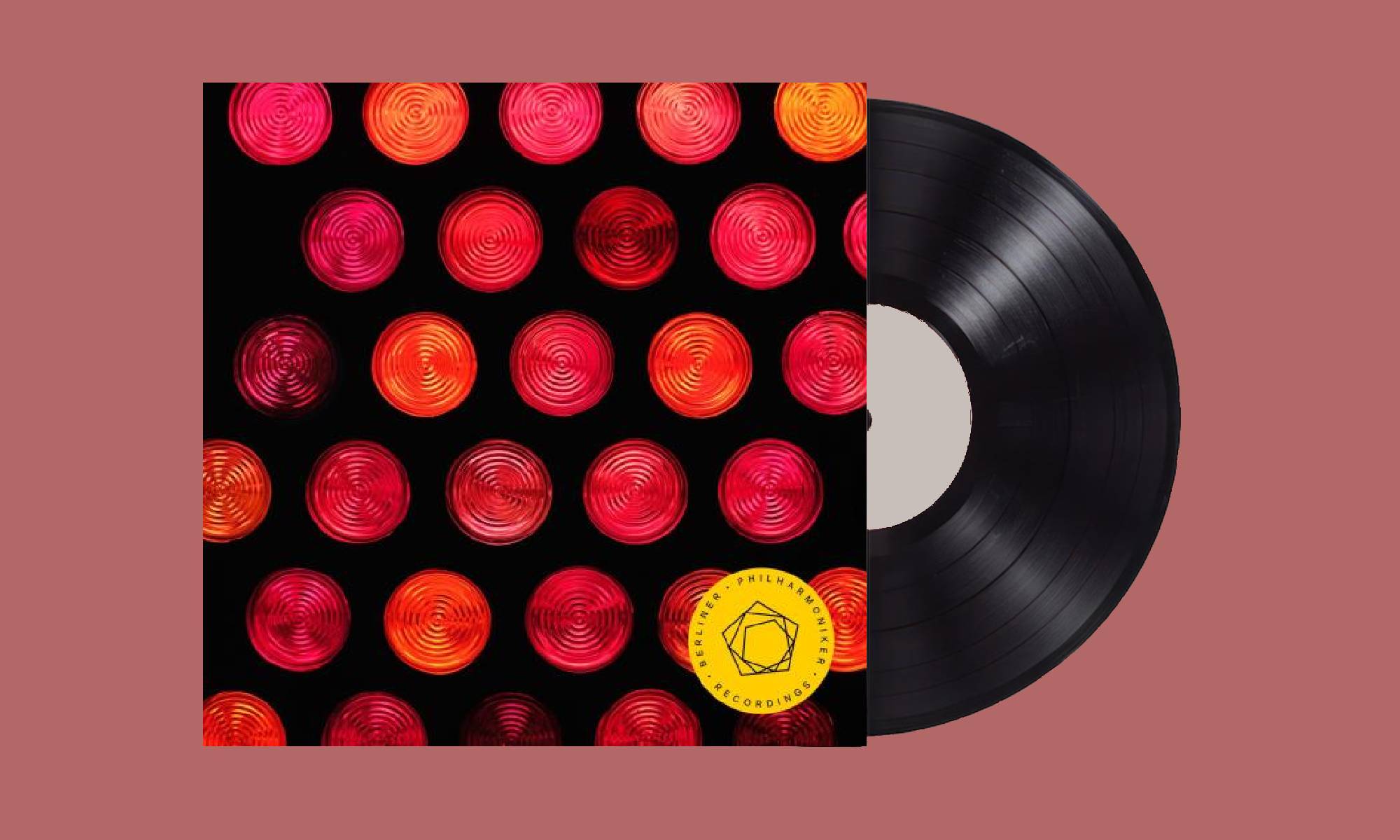
Berliner Philharmoniker, Michael Sanderling, Tugan Sokhiev, Bruno Delepelaire | Haydn · Lalo
Bruno Delepelaire, cello; Berliner Philharmoniker; Michael Sanderling, Tugan Sokhiev
Release day: March 20, 2026
This recording places Bruno Delepelaire, principal cellist of the Berliner Philharmoniker, in a slightly unusual position: not just as a soloist, but as a musician stepping forward from within the orchestra. The programme brings together Haydn’s Cello Concerto No. 2, conducted by Michael Sanderling, and Lalo’s Cello Concerto in D minor, under Tugan Sokhiev — two works that belong to very different moments in the repertoire, yet both depend on a close relationship between soloist and ensemble. Rather than presenting a sharp contrast, the pairing highlights continuity — how the cello moves from a Classical clarity of line to a more expansive, Romantic language without losing its essentially vocal character.
In Haydn, that sense of line is central. Delepelaire avoids exaggeration, letting the phrasing speak naturally and keeping the dialogue with the orchestra fluid and balanced under Sanderling’s direction. The result feels less like display and more like conversation. Lalo, by contrast, brings a broader expressive range, with moments of virtuosity alongside passages that lean towards a more theatrical, almost operatic tone, here shaped with greater weight and flexibility under Sokhiev. Often left in the shadow of later concertos, the work emerges with a strong sense of identity, shaped as much by rhythm and gesture as by lyricism. Across both pieces, what stands out is not only the quality of the playing, but the sense of continuity between soloist and orchestra — a perspective that feels particularly natural coming from a musician so deeply rooted in that collective sound.
Listen here.
MARCH 27, 2026
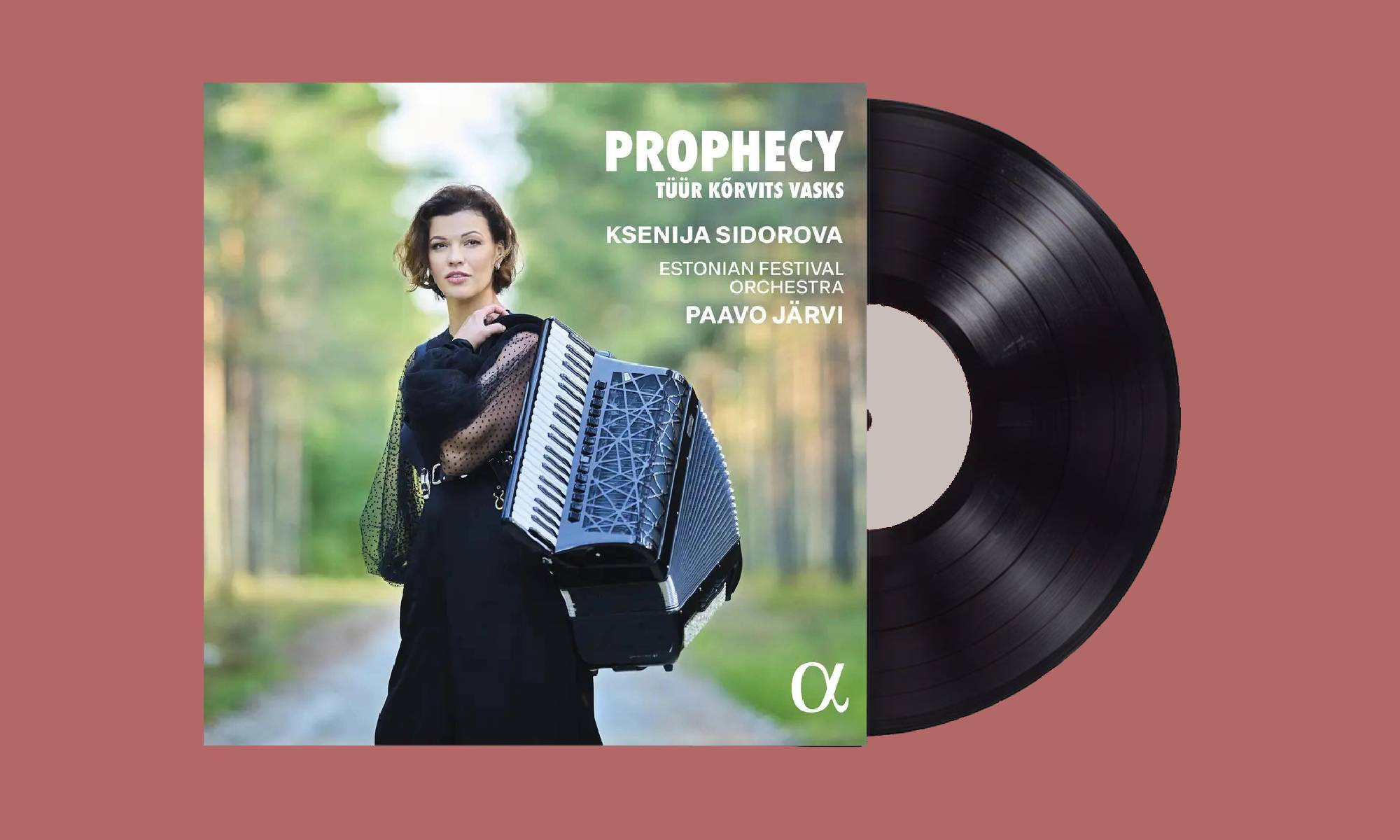
Estonian Festival Orchestra, Paavo Järvi, Ksenija Sidorova | Prophecy
Ksenija Sidorova, accordion; Estonian Festival Orchestra, Paavo Järvi
Release day: February 6, 2026
Few instruments have undergone a transformation in recent decades as striking as the accordion, and few performers have done more to redefine its place on the concert stage than Ksenija Sidorova. In this album, shaped through her collaboration with Paavo Järvi and the Estonian Festival Orchestra, the instrument emerges not as an outsider but as a fully integrated orchestral voice. Bringing together works by Erkki-Sven Tüür, Tõnu Kõrvits and Pēteris Vasks, the programme offers a focused exploration of contemporary Baltic writing, unified by a shared sound world and a close dialogue between composer and performer.
At its centre stands Tüür’s Prophecy, a concerto that places the accordion within a constantly shifting sonic landscape, where lines pass fluidly between soloist and ensemble. The sense of continuity extends into Kõrvits’s Dances, written for Sidorova and heard here in its first recording, where the instrument’s capacity for articulation and colour is closely tied to rhythm and gesture, unfolding in a sequence of stylised forms. Between them, Vasks’s The Fruit of Silence, adapted from a choral work, introduces a moment of stillness, its sustained sonorities and restrained palette offering a point of contrast within the programme. Throughout, Sidorova’s playing balances precision with expressive flexibility, in performances that emphasise not only the technical demands of this repertoire but also the evolving identity of the accordion within contemporary orchestral music.
Listen here.
MARCH 24, 2026
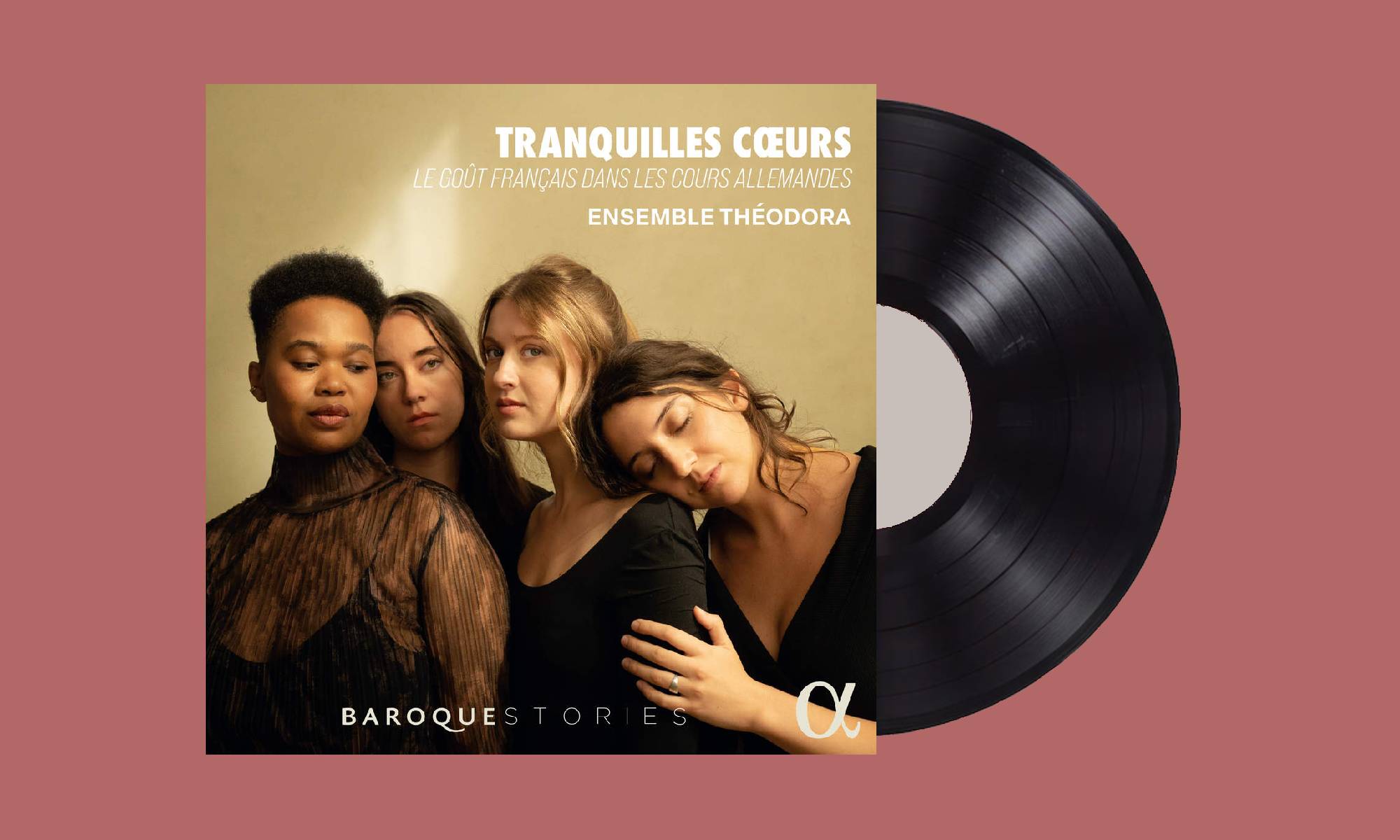
Ensemble Théodora | Tranquilles cœurs
Mariamielle Lamagat · Louise Ayrton · Alice Trocellier · Lucie Chabard
Release day: 2026
Programmes devoted to the Baroque often risk presenting repertory as a succession of isolated works; Tranquilles cœurs instead unfolds as a carefully curated exploration of style in circulation. Built around the influence of French music beyond its borders, the album places composers such as Lully, Campra and Boyvin alongside German figures including Krieger, Fischer and Böhm, tracing how a shared musical language moved, adapted and took on new forms across Europe in the late seventeenth and early eighteenth centuries. Rather than drawing strict national distinctions, the programme highlights points of contact, imitation and transformation, offering a coherent perspective on a repertoire shaped as much by exchange as by origin.
Founded at the Royal Academy of Music in London, Ensemble Théodora approaches this repertoire with a clear sense of purpose, favouring intimacy and blend over display. The performances emphasise the collective dimension of this music — its attention to balance, colour and shared articulation — in contrast to the more overt virtuosity often associated with the Italian tradition of the same period. With voice, violin, viola da gamba and harpsichord forming a tightly integrated ensemble, these readings bring out the refinement and subtlety of a style defined not by individual brilliance but by the precision and elegance of its shared sound world.
Listen here.
MARCH 21, 2026
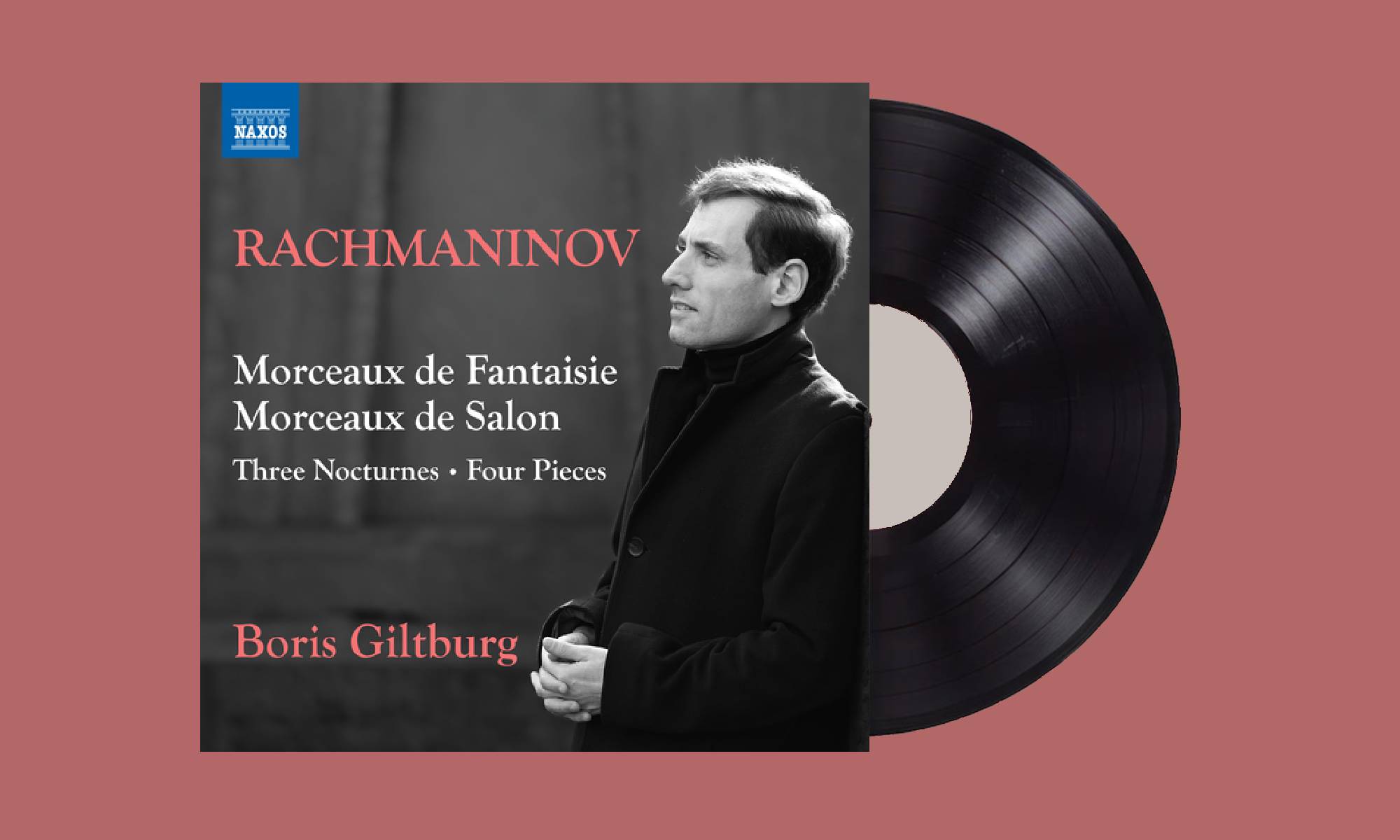
Boris Giltburg | Rachmaninov: Morceaux de Fantaisie · Morceaux de Salon
Boris Giltburg, piano
Release day: 2026
In recent years, Boris Giltburg has returned repeatedly to the music of Sergei Rachmaninov, from the piano concertos and Rhapsody on a Theme of Paganini to the two sonatas and his own arrangement of The Isle of the Dead. This latest release turns to earlier repertoire, bringing together the Morceaux de Fantaisie Op. 3 — including the famous Prelude in C sharp minor — alongside the Morceaux de Salon Op. 10 and a group of youthful works, the Three Nocturnes and Four Pieces, which trace the composer’s development at the very beginning of his career. Written in his teens and early twenties, these pieces already reveal a distinctive musical voice, combining atmospheric writing, bell-like sonorities and a strong sense of narrative within compact forms.
Within the Morceaux de Fantaisie, the Prelude quickly achieved international popularity and would come to define Rachmaninov in the public imagination. Yet the surrounding pieces offer a broader perspective, from the imaginative freedom of the early Nocturnes to the more refined character pieces of the Morceaux de Salon, shaped in the shadow of Tchaikovsky’s influence. Giltburg approaches this repertoire with clarity and structural control, illuminating the contrasts between the composer’s youthful spontaneity and the more mature voice already emerging beneath the surface, in performances that balance expressive intensity with a finely judged sense of proportion.
MARCH 18, 2026
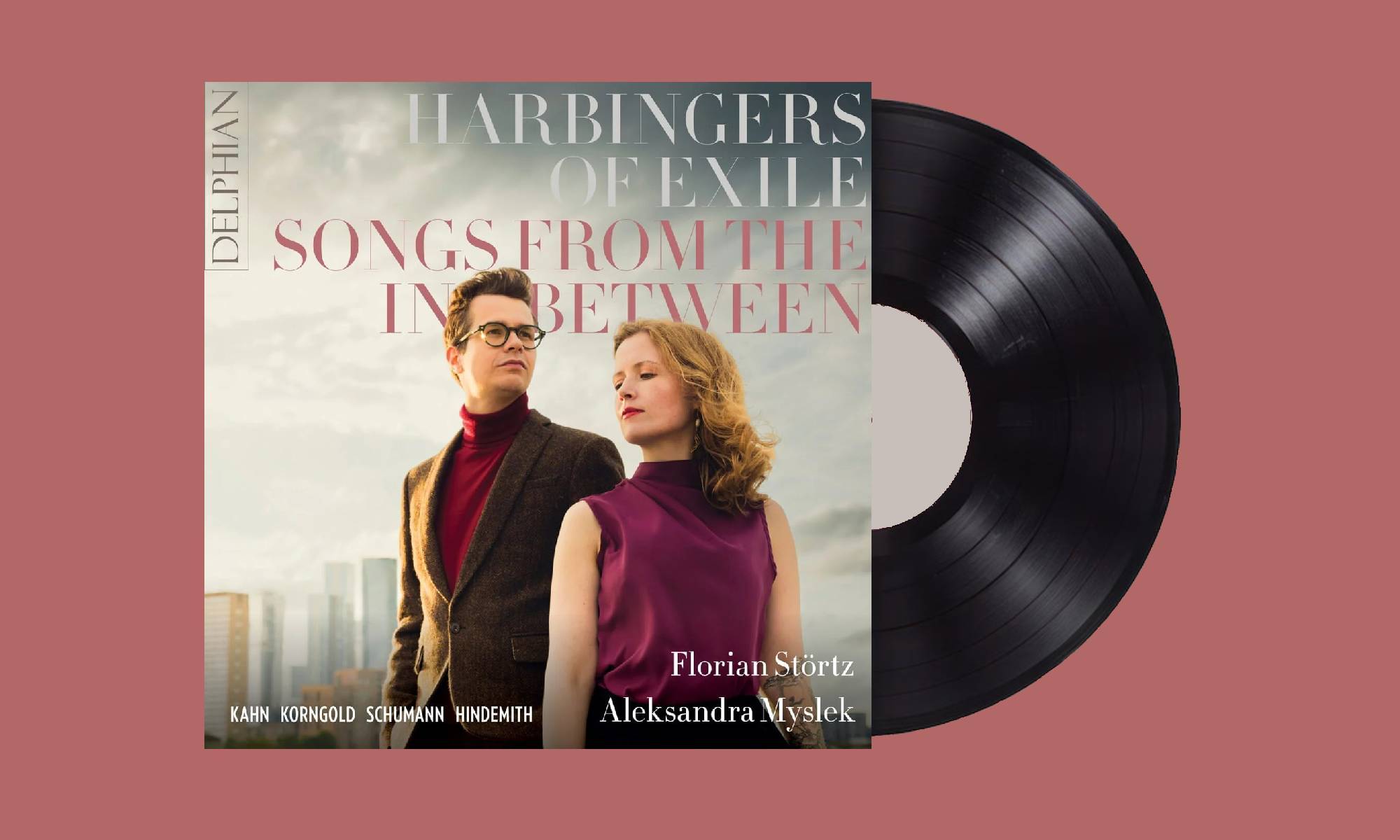
Florian Störtz & Aleksandra Myslek | Harbingers of Exile: Songs from the In-Between
Florian Störtz, bass-baritone · Aleksandra Myslek, piano
Release day: February 2026
Delphian Records
At the centre of this programme stands Robert Kahn, a composer admired in his lifetime yet largely forgotten today, whose songs form the core of Harbingers of Exile: Songs from the In-Between. A near contemporary of Richard Strauss and connected to figures such as Brahms and Clara Schumann, Kahn pursued a musical language rooted in clarity, lyricism and emotional sincerity. Forced to leave Germany in 1939, he spent his final years in Britain, continuing to compose in relative isolation. This recording places his songs alongside works by Schumann, Korngold and Hindemith, tracing a broader landscape of German song shaped by exile, memory and cultural displacement.
The performances by Florian Störtz and Aleksandra Myslek emphasise the intimacy and expressive depth of this repertoire. Kahn’s writing, often described as “baritonal” in its vocal range, unfolds in long lyrical lines supported by piano parts of remarkable richness and independence. Myslek’s playing highlights the subtle harmonic shifts and inner voices of the accompaniment, while Störtz brings a focused, text-driven approach to the vocal line. Together, they create a finely balanced dialogue between voice and piano, allowing these songs — poised between tradition and rediscovery — to emerge with quiet intensity and renewed immediacy.
MARCH 15, 2026
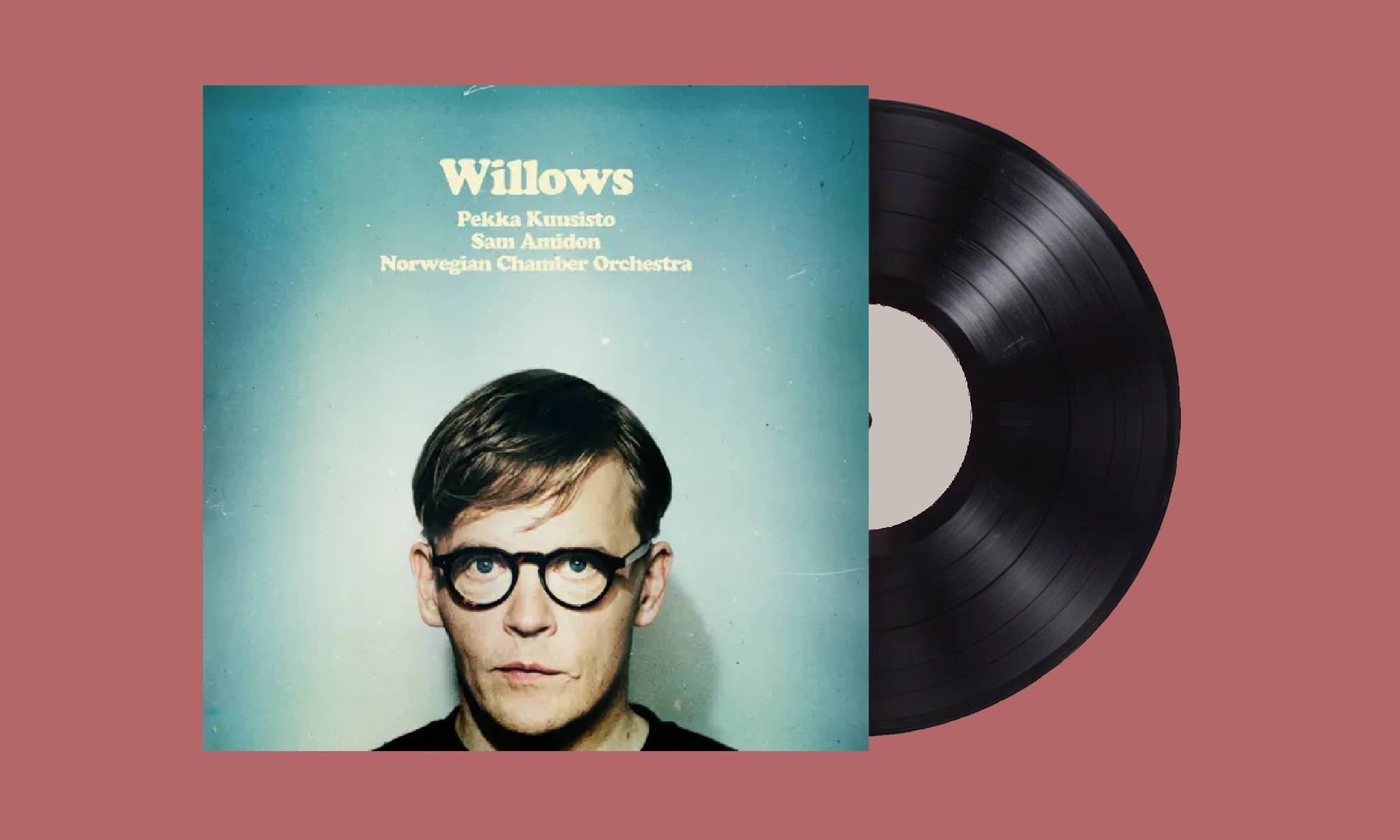
Pekka Kuusisto | Willows
Pekka Kuusisto · Sam Amidon · Norwegian Chamber Orchestra
Release day: February 2026Difficult to classify and deliberately so, Willows brings together violinist and director Pekka Kuusisto, the Norwegian Chamber Orchestra, and folk singer Sam Amidon in a programme that moves freely across stylistic boundaries. The album places Ralph Vaughan Williams’s The Lark Ascending alongside contemporary works by Caroline Shaw and Ellen Reid, before opening into a sequence of traditional American songs. Rather than following a single stylistic thread, the programme unfolds as a fluid landscape in which classical repertoire, contemporary composition and folk traditions overlap and interact.
That openness reflects Kuusisto’s characteristically adventurous musical outlook. In The Lark Ascending, the violinist and the Norwegian Chamber Orchestra favour a restrained, almost intimate sound that avoids the piece’s more overtly romantic rhetoric. Shaw’s Plan & Elevation explores shifting proportions and textures within the string orchestra, while Ellen Reid’s Desiderium, written for Kuusisto, introduces a more personal tone of longing and remembrance. The final sequence of traditional songs, sung by Sam Amidon and accompanied by guitar and banjo, moves even further beyond conventional classical boundaries. Arranged by Nico Muhly and adapted for chamber orchestra by Bernard Rofe, these performances bring Amidon’s distinctive voice into dialogue with the ensemble, creating a sound world where folk storytelling and orchestral colour coexist with striking naturalness.
MARCH 24, 2026
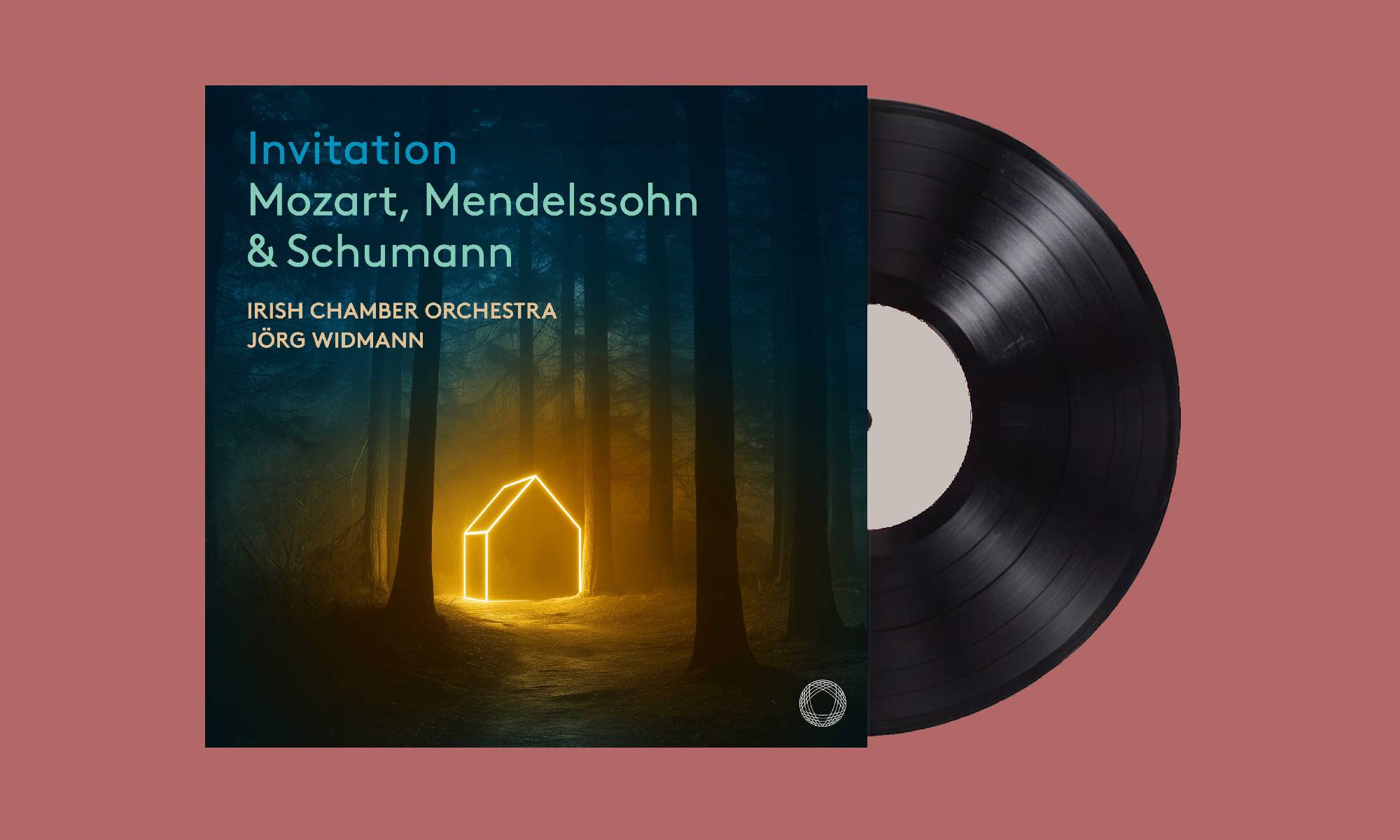
Jörg Widmann | Mozart, Mendelssohn & Schumann
Irish Chamber Orchestra, Jörg Widmann
Release day: February 2026
Few musicians today combine the roles of composer, conductor and instrumentalist as naturally as Jörg Widmann. In this recording with the Irish Chamber Orchestra, he appears in two of those capacities — conducting the ensemble and joining its wind section as clarinettist in Mozart’s Serenade for Winds in C minor, K.388. The programme brings together three works that illuminate different facets Classical and early Romantic ensemble writing.
Mozart’s Serenade transforms what was traditionally considered “entertainment music” into something far more intense and expressive, while Mendelssohn’s String Symphony No. 8 reveals the astonishing contrapuntal skill of the teenage composer. The album concludes with Schumann’s Overture, Scherzo and Finale, a work written in a particularly buoyant creative mood whose lively rhythms and sweeping orchestral writing bring the programme to an exuberant close. Together, these performances reflect the musical chemistry that characterised Widmann’s decade-long tenure as Chief Conductor and Artistic Director of the Irish Chamber Orchestra.
Listen here.
MARCH 9, 2026
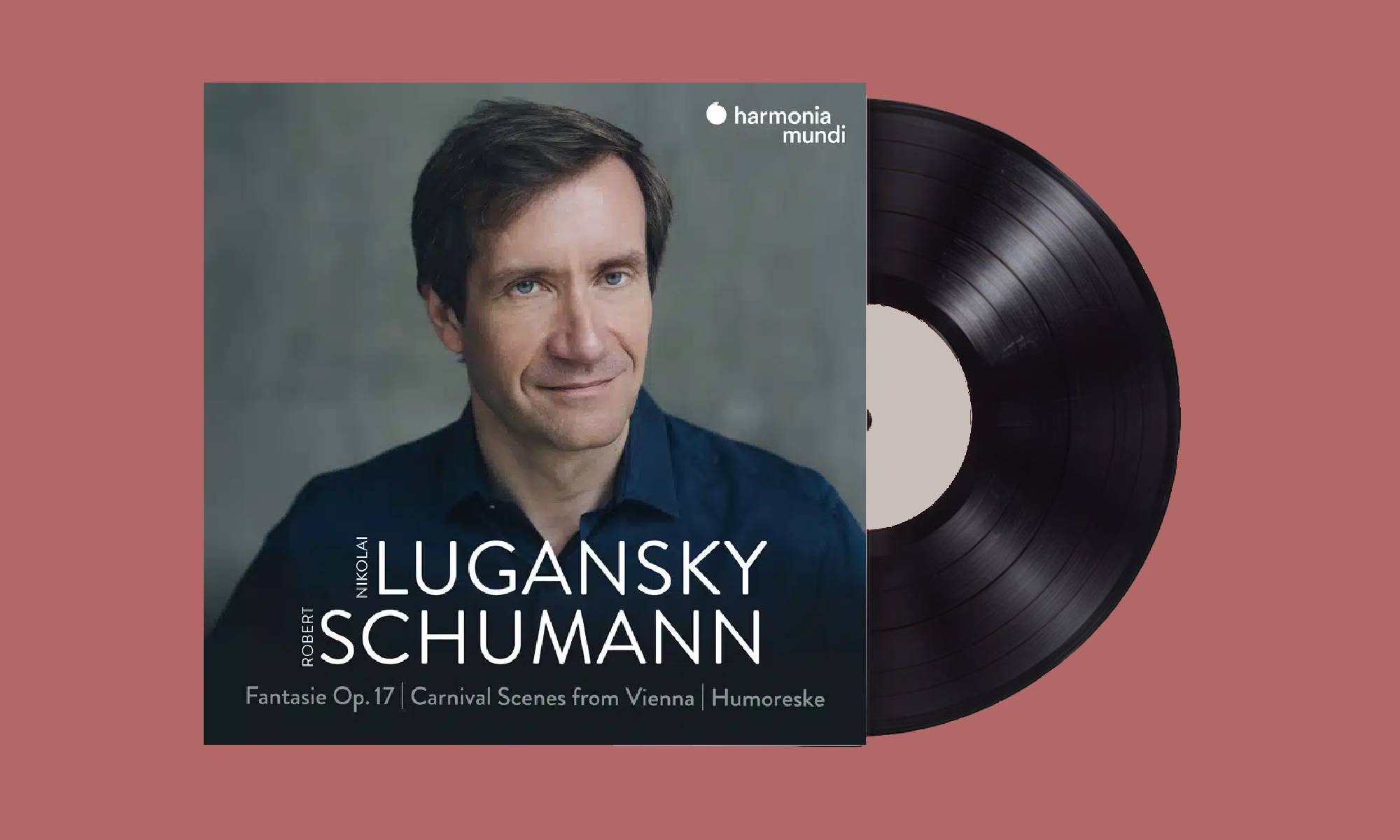
Nikolai Lugansky | Schumann: Fantasie Op. 17 · Faschingsschwank aus Wien · Humoreske
Nikolai Lugansky, piano
harmonia mundi
Release day: February 2026
Three large-scale piano works by Robert Schumann come together in this new recording by Nikolai Lugansky, offering a glimpse into the composer’s imaginative and deeply personal musical language. The programme pairs the monumental Fantasie in C major Op. 17 with two works from the following years — Humoreske Op. 20 and Faschingsschwank aus Wien Op. 26 — music in which Schumann moves freely between lyrical introspection, sudden contrasts and bursts of virtuosity.
Written during the late 1830s, these works reflect Schumann’s fascination with fantasy, irony and poetic suggestion. The Fantasie, conceived in connection with a monument to Beethoven, unfolds on a grand scale, while the Humoreske and Faschingsschwank aus Wien explore a more fragmentary and playful world, where moods shift rapidly and musical ideas appear like scenes in a sequence of character pieces. Lugansky approaches this repertoire with performances that combine technical brilliance with the emotional depth these pieces demand.
Listen here
MARCH 6, 2026
Isabelle Faust & Alexander Melnikov | Mozart: Sonatas for fortepiano & violin, Vol. 4
Isabelle Faust, violin · Alexander Melnikov, fortepiano
Release day: February 2026With this fourth volume in their Mozart sonata cycle, Isabelle Faust and Alexander Melnikov continue a project that explores the composer’s works for violin and keyboard on historical instruments. The programme brings together four sonatas written between 1778 and 1785 — K.296, K.303, K.380 and K.481 — tracing Mozart’s gradual transformation of the genre from keyboard-centred pieces into fully balanced chamber dialogues between the two instruments.The works span crucial moments in Mozart’s career, from the Mannheim period to his early years as an independent composer in Vienna. In the earlier sonatas, the violin begins to move beyond its traditional accompanying role, while the later works reveal a more mature partnership between the instruments. By the time of K.481, completed in 1785, violin and keyboard share thematic responsibility in music of striking expressive depth, culminating in a set of variations that closes the sonata.
Faust performs on her 1704 Stradivarius “Sleeping Beauty”, while Melnikov plays a fortepiano after Anton Walter, whose lighter sonority highlights the conversational character of Mozart’s writing.
Listen here.

MARCH 3, 2026
Unsuk Chin | Gougalōn, Double Concerto & Graffiti
Ensemble intercontemporain, Pierre Bleuse
Release day: February 2026
Few contemporary composers have shaped the orchestral imagination of the past decades as decisively as Unsuk Chin, and few ensembles have been as closely associated with the performance of new music as Ensemble intercontemporain. This release brings them together in three substantial works — Gougalōn (2009/11), the Double Concerto for piano, percussion and ensemble (2002), and Graffiti (2012) — forming a compact but revealing portrait of Chin’s writing for large instrumental forces. Under Pierre Bleuse, the ensemble approaches this repertoire with the precision and structural clarity it demands.
Each work explores a different facet of Chin’s sound world. Gougalōn, inspired by childhood memories of Korean street theatre, unfolds in six sharply contrasted episodes whose surface vitality conceals intricate construction. The Double Concerto dissolves the traditional opposition between soloists and ensemble: the piano — prepared with small metal elements that subtly alter its colour — and percussion interact with the surrounding musicians in tightly interwoven processes of rhythmic and textural transformation. In Graffiti, Chin draws on a broad instrumental palette, moving between density and transparency across its three movements. Together, these performances highlight a composer for whom complexity is never ornamental but structural — and whose music continues to occupy a central place in the contemporary repertoire.

Subscribe to our newsletter
Support Moto Perpetuo
We are an independent platform dedicated to classical music journalism. Your support helps us maintain rigorous, ad-free coverage, news, and analysis without paywalls.
donate