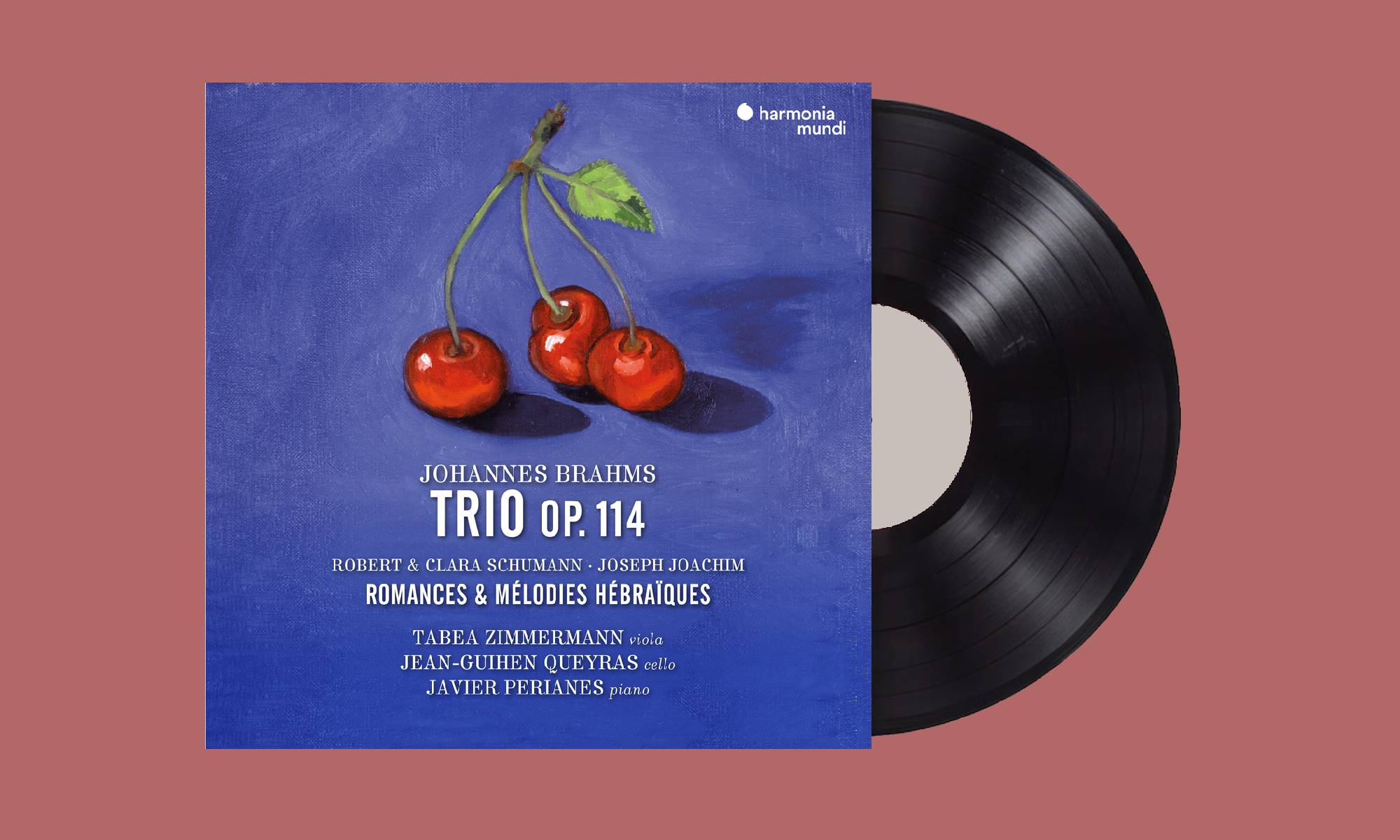
Brahms, Robert and Clara Schumann, Joachim | Trio Op. 114, Romances and Hebrew Melodies
Tabea Zimmermann, viola; Jean-Guihen Queyras, cello; Javier Perianes, piano
Label: harmonia mundi. Release day: March 13, 2026
This programme brings together music shaped by one of the most significant artistic circles of the 19th century, placing Johannes Brahms alongside Robert and Clara Schumann and Joseph Joachim. Rather than focusing solely on the Trio Op. 114, the album traces a network of personal and musical relationships, moving through Romances, short character pieces, and Joachim’s Hebrew Melodies. The result is not a linear survey but a portrait of shared ideals, where chamber music becomes a space for intimacy and exchange.
At its centre, Brahms’s Trio — heard here in its version for viola, cello, and piano — reflects a late style marked by restraint and inwardness. That same sense of concentration extends across the programme, where the writing avoids overt display in favour of closely interwoven lines and subtle shifts of colour. The viola plays a central role in shaping this perspective, not simply as an alternative to the clarinet but as a voice that reinforces the music’s darker, more introspective tone. Across the album, the focus remains on continuity: between composers, between performers, and between different forms of musical expression.
Listen here.
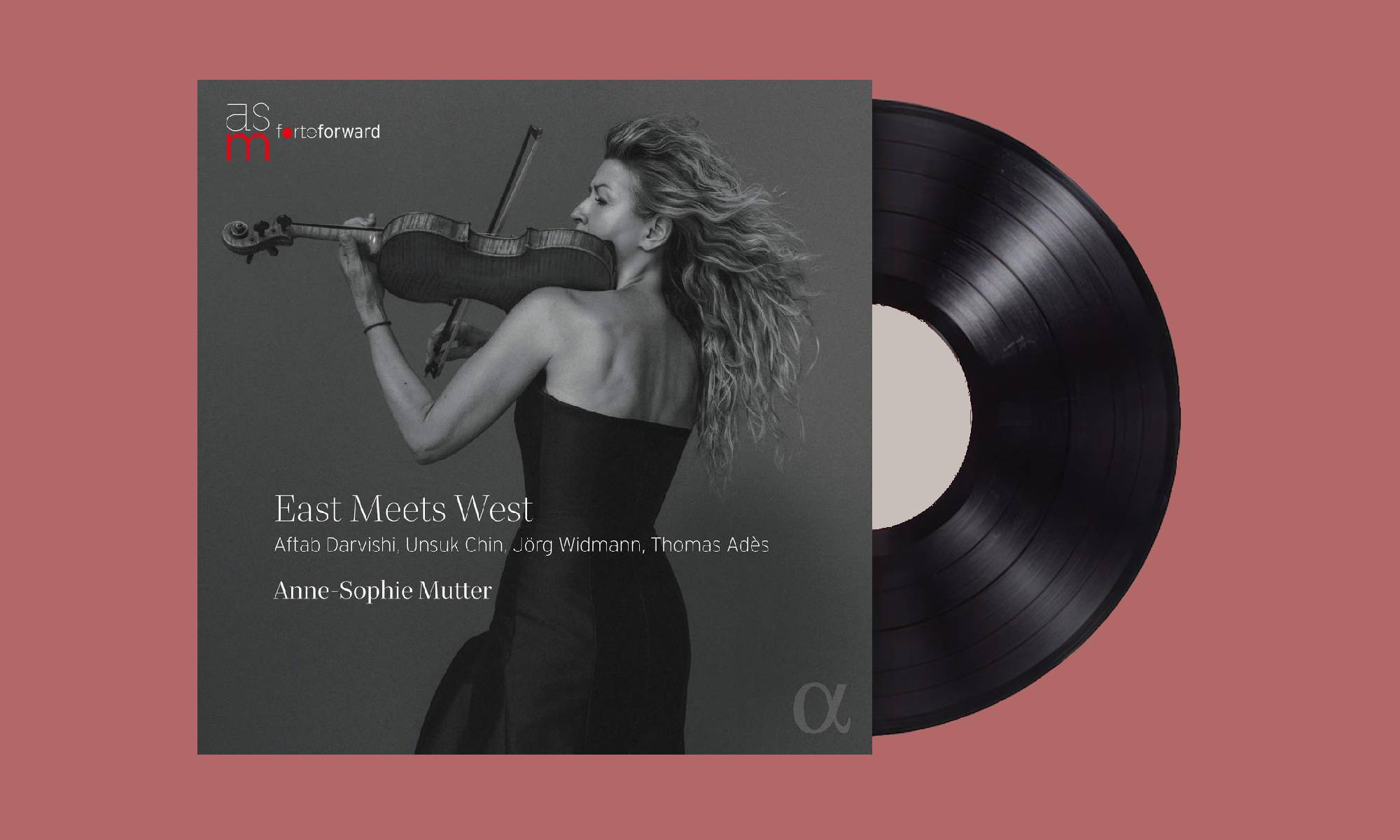
Anne-Sophie Mutter | East Meets West
Anne-Sophie Mutter, violin; Ye-Eun Choi, Nancy Zhou; Muriel Razavi, Pablo Ferrández; London Symphony Orchestra; Thomas Adès
Label: Alpha Classics · Release day: March 27, 2026
This album forms part of Anne-Sophie Mutter’s ASM Forte Forward series, a project centred on contemporary works written for her. Bringing together music by Aftab Darvishi, Unsuk Chin, Jörg Widmann, and Thomas Adès, the programme is shaped both by collaboration and by contrast, moving from solo violin to duo, string quartet, and orchestral writing. Rather than presenting a single stylistic direction, East Meets West traces a broader landscape, where different musical traditions and approaches intersect within a shared framework.
What connects these works is a focus on interaction. Chin’s Gran Cadenza transforms the idea of virtuoso display into dialogue, while Widmann’s quartet explores form as a process of expansion and variation. Darvishi’s Likoo draws on the expressive world of Baluchi song without direct quotation, and Adès’s Air unfolds as an extended, vocal-like line for violin and orchestra. Across the album, the emphasis is less on contrast for its own sake than on the ways new music can emerge through exchange — between composers and performer, and between distinct musical languages.
Listen here.
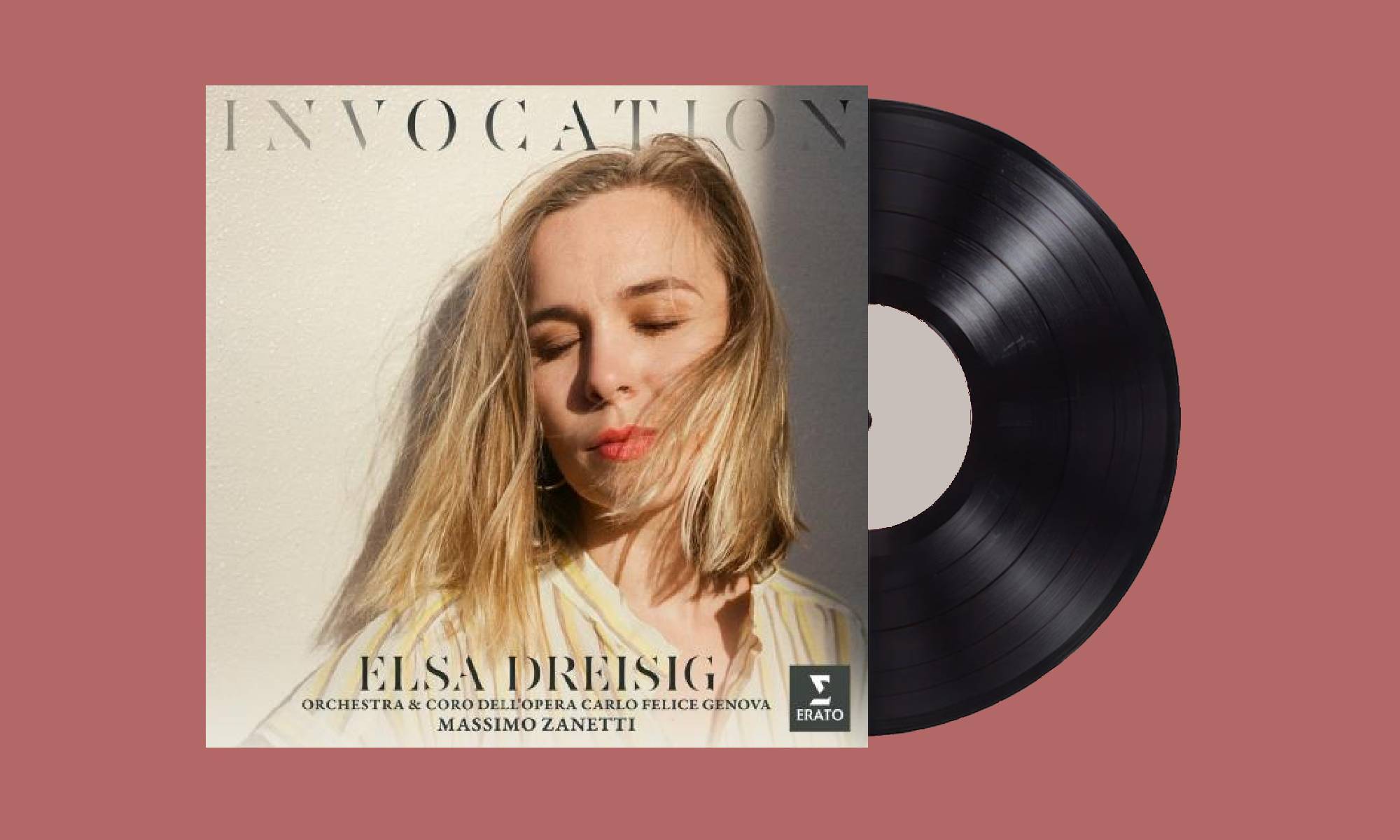
Elsa Dreisig | Invocation
Elsa Dreisig, soprano; Orchestra and Chorus of the Teatro Carlo Felice Genova; Massimo Zanetti
Label: Erato · Release day: April 3, 2026
This album centres on the idea of invocation in opera — moments where characters turn inward while addressing something beyond themselves. Elsa Dreisig brings together a wide range of arias, from Dvořák and Janáček to Verdi, Wagner, and Puccini, shaped less as a sequence of highlights than as a concept-driven programme. Familiar pieces such as Song to the Moon or Vissi d’arte appear alongside less frequently heard repertoire, creating a perspective that moves across styles while maintaining a clear dramatic thread.
What unifies these works is not their origin but their function. Whether framed as prayer, plea, or reflection, each moment carries a sense of suspension, where the voice shifts from outward projection to a more intimate form of expression. Dreisig approaches this repertoire with an emphasis on nuance and colour, allowing contrasts to emerge without forcing them into a single vocal profile. The result is a programme that highlights the inner dimension of operatic characters, where vulnerability and intensity coexist within a shared expressive space.
Listen here.
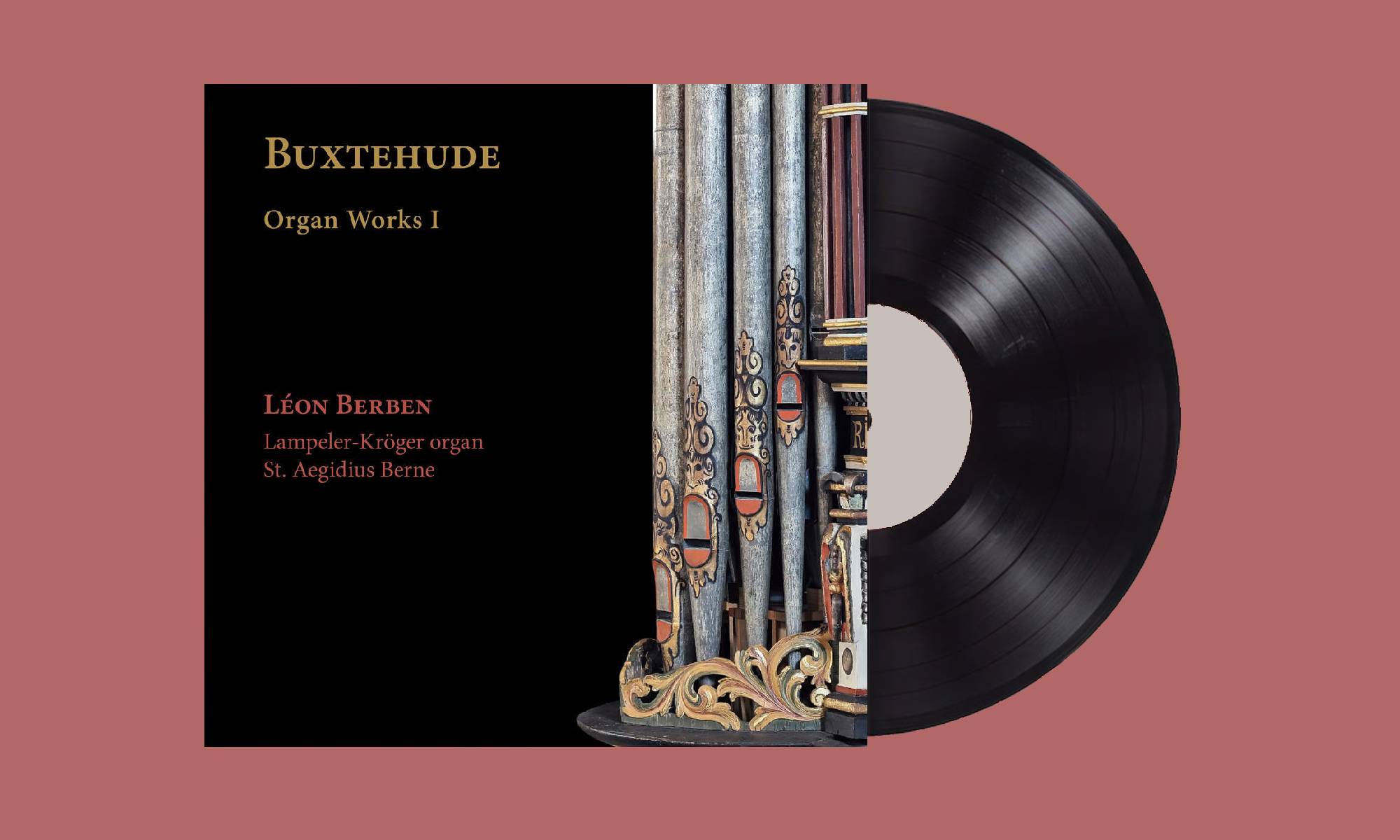
Leon Berben | Buxtehude: Organ Works I
Leon Berben, organ (Lampeler–Króger organ, St. Aegidius, Berne)
Label: Ramée · Release day: March 6, 2026
This recording opens Leon Berben’s exploration of Dieterich Buxtehude’s (1637-1707) organ works, placing the instrument at the centre of the project. Performed on the Lampeler–Króger organ in Berne, the album is shaped by a specific historical sound environment, where tuning and colour contribute directly to the character of the music. The programme moves across praeludia, chorale settings and free works, not as a fixed sequence but as a survey of contrasting forms within Buxtehude’s output.
Berben’s approach reflects the fluid nature of the sources themselves, where multiple versions and the absence of autographs leave space for interpretative decisions. Ornamentation and variation are treated as structural elements rather than additions, shaping the musical line from within. The result is a reading that avoids rigidity, focusing instead on continuity, gesture, and detail, and presenting this repertoire as something flexible and closely tied to the act of performance.
Listen here.
Subscribe to our newsletter